The Chöd Damaru
Damaru Fabricated according to ancient tradition
DamaruWorks drums include these essential qualities:
- Made by our Bhutanese fabricator to highest level of craftsmanship, according to sacred tradition.
- Made from 200-year old SengDeng (Acacia species) trees culled from the virgin forests of Bhutan, cut during winter and seasoned for the right length of time
- Trinpak skins, not painted, but natural coloring; buried for several weeks with mineral salts and herbs according to terma tradition
- Metal ring and shell ring as prescribed by textual sources
- Sacred mantras in gold, with male mantras on one side (with white background) and female mantras (with red background)according to the MaChik tradition
- 108 human skull powder within the beaters
- Exquisite sound, beautifully finished woods
- An inconceivably powerful conduit of the blessings of the lineage of Chod
- Excellent weight balance, making them very easy to play
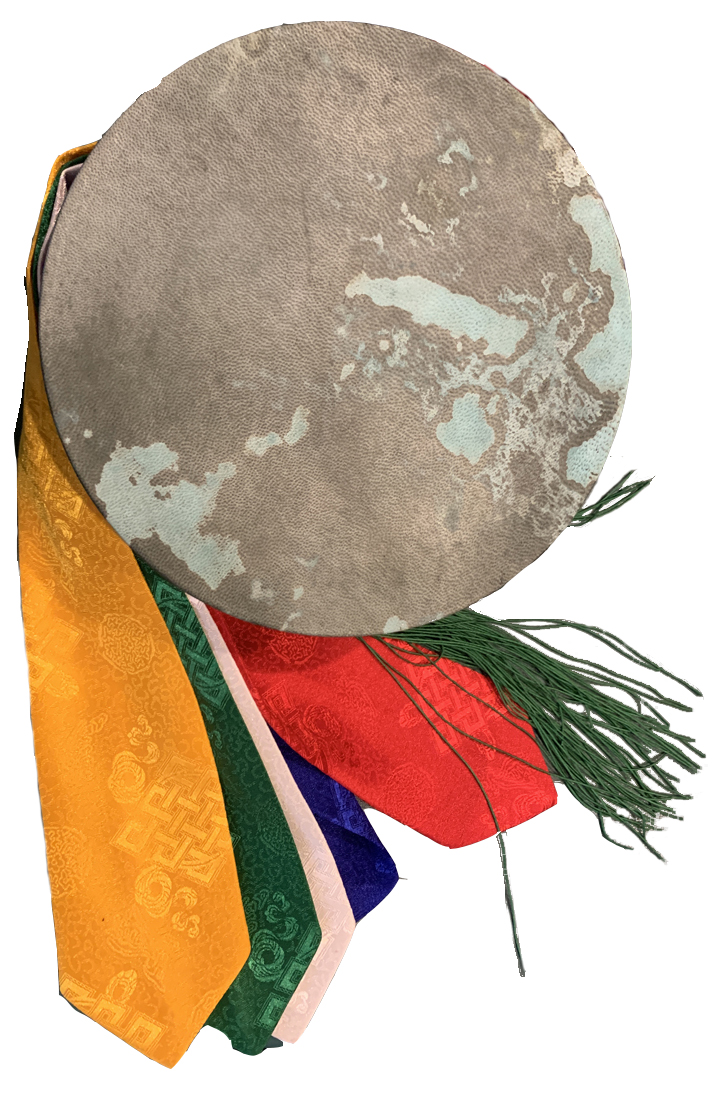
Qualities of the Chöd Damaru
The Chod Damaru (Choda) is the central instrument of Chod. It is a sacred Vajrayana implement that, if made correctly, has extraordinary properties:
- It is the dwelling place of the divine feminine, the Dakini;
- It is itself synonymous with the enlightened forms of Prajnaparamita, Vajrayogini and Troma.
- The damaru is the sound of Sunyata or complete openness, a bridge that connects us to the essential source, the basis of being that is beyond name and form.
- It is also a unique channel for the profound blessings and power of the lineage and a portal for the mystical forces that protect the dharma.
- The damaru is thus the sound of the dharma itself and a proclamation of the fearlessness of the solitary yogin or yogini.
All this being so, an important and deep relationship comes to exist between the Chod practitioner their Chod drum. Every part of the drum has both symbolic meaning and energetic function (such details to be published in my forthcoming Tibetan Cho: Cutting Through to Freedom from Snow Lion). This being the case, there are many requirements and essential components to its manufacture and use.
Until recently, the art of making these according to the exacting Vajrayana specifications seemed almost extinct, but on a recent trip to Bhutan I discovered that the ancient art of damaru fabrication is still vibrantly alive! Now, we are offering completely authentic and accurately-made Chod damarus in the West for the first time.
Our fabricator is a Bhutanese Chod and Troma practitioner himself, who upholds the highest standards of workmanship and respect for sacred implements. These Choda will last a lifetime as a fitting vessel for taming our own mind and that of suffering sentient beings. As sacred works of art, they can be passed on with pride to future generations of practitioners!
Wood
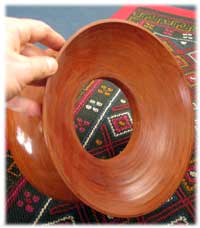
- The drum shell is made of finest hand picked SengDeng wood (Acacia spp.) or Rosewood (Pterocarpus santalinus), according to tradition, free of defects, cracks, etc., with exquisite finish.
- Proper dimensions of the Chod damaru are maintained, showing a 2:1 ratio of diameter, depth and the opening between the two sides or bells of the damaru.
- They are finished so that the wood grain shows, whether of the "gold" style (SengDeng) or "black style" (Rosewood).
Skin
In accord with terma, skins are buried with minerals salts (copper) and herbs for a month. Do not lose tone or become warped and damaged.If they become looser from moisture at any time, merely coming into a dry area restores the original tone. The living skins should be gently rubbed with a small amount of lanolin on a regular basis. (Note: the inner skins are marked by the highly secret \'35 Dakini Blood, as prescribed in the authoritative Mindroling Manual of Vajrayana Implements (2003).
Mantra
The interior of the drum has a red pigment ground, upon which are hand-drawn gold mantras and seed syllables, as prescribed by traditional texts and terma. These include mantras of the Prajnaparamita, Dudjom Vajrayogini, Troma and so on. Commercial damarus either have no mantras or have cheap photocopied paper mantras glued in.
Conch and Iron Rings
A white conch shell ring encircles the strap of the collar, having symbolic significance and providing an essential support for the base of the hand holding the strap. A metal ring (iron, steel or copper) connects the strap to the chopen banner.'
Collar & Hand strap
We use a broad strap made of leather, in the traditional style. The handle is thick, making it easy to grasp and comfortable for long playing. The suede texture of the leather helps prevent chaffing or blistering, familiar problems during long Chod rituals.
Cases
The case, or "shoop," is not just for carrying the damaru. Our cases are sturdy with wider straps, tight fit and a moisture-protective red wool lining throughout. The case also has a removable DamaruWorks crest.
- There is a profound esoteric science behind each detail of these sacred implements.
- Damaru skins, wood, inner mantras, beaters, and so on, each have specific vibrational and spiritual purpose.
- The Cho damaru acts as a conduit, a vortex that opens the practitioner up to a profound blessing stream, coming form the yidams, protectors, and lineage masters of Chod.
- It also broadcasts our compassionate activity of benefiting beings in all realms of samsaric suffering.
cutting through of obstacles, and cutting through delusion and elemental distortion. This is the essence of Vajrayana!
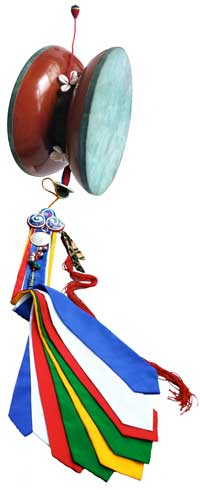 Sacred Mind
The profound path of Vajrayana is able to overcome obstacles in our day-to-day lives and to uncover and rediscover our own pristine, unfabricated Wisdom Mind. This allows us to help others in unfathomable ways. Through transforming our physical and energetic bodies, karmic patterns, sensory experience and reactive mind, we can come to dwell in the basic matrix of consciousness, the stratum from while all experience arises.
Sacred Practice
The great beings of the past developed a wide variety of skillful means to guide us towards full this realization. Transmitted from Wisdom mind through an unbroken lineage of living masters is has reached our present day. Vast, profound, sometimes complex, the intricate detail of the sadhana, visualizations, mantra and mudras, are the container that keeps the living dharma intact and free of contamination or distortion.
Sacred Chöd Damaru
An essential part of this matrix of practice is the spectrum of unique sacred tantric implements used daily in Vajrayana practice. Their nature is both practical and symbolic; They perform energetic functions that directly impact the fabric of experience and phenomena. In fabricating sacred implements like the damaru, the form, proportions and materials are a matter of exacting specifications. In this time of extreme challenge, we need an impeccable approach to our dharma practice. By guarding our tradition and sacred intentions, this can be a time, not of shadow, but of transformation.
Preserving Chöd
Since the diaspora from Tibet and the fracturing of the population and culture, there has been a dramatic degradation of the level of the sacred objects, including the Chod damaru. Shoddy and inauthentic instruments simply cannot be a conduit for the powerful energies required for our successful practice. Fortunately, the texts describing the proper qualities and characteristics of these items still exist and, more importantly, a few rare craftsmen have kept the secret traditions of how to create a genuine damaru intact. However, Until now, few Westerners have been exposed to these quality materials so that the difference can be discerned. Now, for the firs time, authentic Chod damaru are available, created according to highest ancient traditions.
